生字的意思藏在 but 的另一邊——savvy 的相反是「要很努力才做得到」
題目
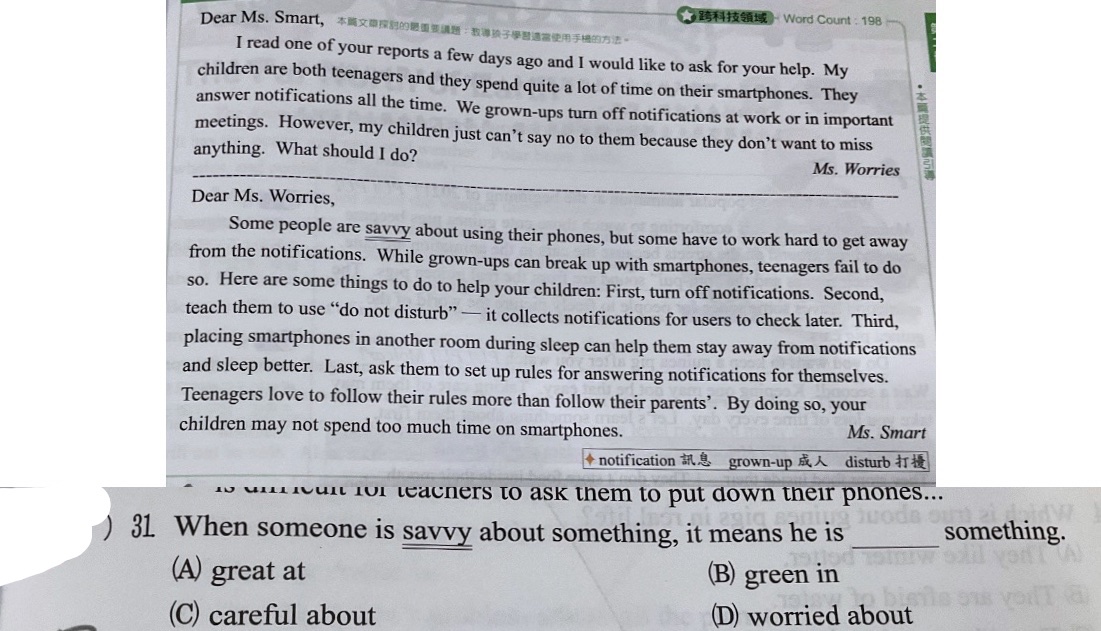
I read one of your reports a few days ago and I would like to ask for your help. My children are both teenagers and they spend quite a lot of time on their smartphones. They answer notifications all the time. We grown-ups turn off notifications at work or in important meetings. However, my children just can’t say no to them because they don’t want to miss anything. What should I do?
Some people are savvy about using their phones, but some have to work hard to get away from the notifications. While grown-ups can break up with smartphones, teenagers fail to do so. Here are some things to do to help your children: First, turn off notifications. Second, teach them to use “do not disturb” — it collects notifications for users to check later. Third, placing smartphones in another room during sleep can help them stay away from notifications and sleep better. Last, ask them to set up rules for answering notifications for themselves. Teenagers love to follow their rules more than follow their parents’. By doing so, your children may not spend too much time on smartphones.
Q31. When someone is savvy about something, it means he is ______ something.
- (A) great at ← 正確答案
- (B) green in
- (C) careful about
- (D) worried about ← 我的答案
錯在哪裡
這篇文章從頭到尾都在講煩惱:寫信的人叫 Ms. Worries、 內容是媽媽擔心小孩滑手機、語氣是求助。 在這種氛圍下,worried about 讀起來非常「順」。
但字義推測題不能靠順不順,要靠那一句話裡的線索。 而這句話的線索非常明確,就是中間那個 but:
Some people are savvy about using their phones, but some have to work hard to get away from the notifications.
but 的作用是「前後相反」。既然後半是「有些人得很努力才擺脫得了通知」, 那前半就必須是「有些人輕鬆就能搞定手機」。
如果 savvy = 擔心,那前半變成「有些人擔心手機,但有些人得很努力擺脫通知」 ——這兩件事根本不相反,but 就沒有存在的理由了。
錯因:看到 but 卻沒有把它當工具用。
正確解法
savvy about using their phones but
(相反) some have to
work hard to get away
from the notifications
but 兩邊講的是同一件事(處理手機通知)的兩種人。
右邊 = 要很努力才辦得到 → 左邊必須是 = 不用努力就辦得到 = 很在行。
savvy about = great at(擅長)。
| 句子 | 誰做得到 | 誰做不到 |
|---|---|---|
| Some are savvy… but some have to work hard… | savvy 的人 | 要很努力的人 |
| While grown-ups can break up with smartphones, teenagers fail to do so. | 大人(做得到) | 青少年(做不到) |
下一句用 While(雖然/然而)又做了一次同樣的對比:能/不能。
整段的主軸就是「有些人搞得定手機,有些人搞不定」——
是「能力」的對比,不是「情緒」的對比。
所以答案一定跟「會不會、行不行」有關。
- ✓(A) great at(擅長) 正好是「要很努力才做得到」的相反面。 而且 be great at + N/V-ing 的搭配也正確 (= be good at)。
- ✗(B) green in
green 當「生手、沒經驗的」時,意思跟 savvy 剛好相反,語意就錯了。
而且搭配詞也不對:是 a green hand(新手)、green at something, 沒有 green in 這個用法。 - ✗(C) careful about(小心)
小心的人也可能要很努力——
放進 but 的左邊,跟右邊不構成相反,對比就消失了。
「小心」講的是態度,文章講的是能力,層次不對。 - ✗(D) worried about(擔心)
同樣不構成對比:擔心手機的人,本來就很可能得努力擺脫通知,
前後變成同一種人,but 就用錯了。
這個選項是靠整篇「煩惱」的氣氛在騙人,不是靠句子的邏輯。
要記住的觀念
- 猜字義最有力的工具是「對比連接詞」:but / however / while / instead / on the other hand。
看到它,就把左右兩邊各寫一句,兩句必須相反。 然後用「右邊的相反」去推左邊那個生字。 - 另外三種常見的解字線索:
① 定義句:… means/that is/or(That is, savvy means…)
② 舉例:for example/such as/like
③ 同義並列:and/as well as(左右意思相近) - 文章的「氣氛」不能當證據。 這篇的署名是 Ms. Worries、講的是煩惱, 但要解的那個字出現在 Ms. Smart 的回信裡,講的是「有些人很在行」。 解字只看那一句,不看整篇心情。
- 選項的搭配詞(介系詞)也是刪答案的工具。 green in ✗(應為 green at/a green hand), 光是介系詞不對就可以刪。
- 把「能力」和「情緒」分開。 great at = 能力;worried/careful = 情緒或態度。 先判斷文章在比什麼,再挑同一類的選項。
延伸:這篇文章的其他重點
break up with = 分手、斷絕關係
grown-ups can break up with smartphones = 大人能和手機「分手」(放得下手機)
這裡是很生動的比喻用法,考題很愛考。
fail to + 原形V = 沒能做到、做不到(不是「失敗」而已)
teenagers fail to do so = 青少年做不到
say no to = 拒絕 get away from = 擺脫
stay away from = 遠離 set up rules = 訂規則
還有一個結構值得注意:Ms. Smart 用
First… Second… Third… Last… 列出四個建議,
這種文章一定會出「她建議了幾件事/哪一件不是她的建議」的題目,
讀的時候直接在旁邊編號 1234。
類題自我檢測
1. My brother is thrifty, but I spend all my money as soon as I get it.
thrifty 最可能是什麼意思?
(A) 花錢很凶的 (B) 節儉的 (C) 有錢的 (D) 小氣又愛計較的
2. Unlike his talkative sister, Ken hardly says a word in class.
talkative 最可能是什麼意思?
(A) 安靜的 (B) 聰明的 (C) 話很多的 (D) 害羞的
看解答
1. (B) 節儉的。but 的右邊是「一拿到錢就花光」,
所以左邊必須相反 → 會存錢、節儉。
(D) 小氣又愛計較是「多寫」了負面評價——
but 只保證「相反」,不保證「帶貶意」,不要自己加料。
2. (C) 話很多的。線索字是 Unlike(不像、與……不同),
它和 but 一樣是對比訊號。
右邊是 hardly says a word(幾乎不說話)→ 左邊必須相反 → 很多話。
兩題的做法完全一樣:找到對比詞 → 讀懂「已知的那一邊」→ 取相反。
你不需要真的認識那個生字。
我的原始作答
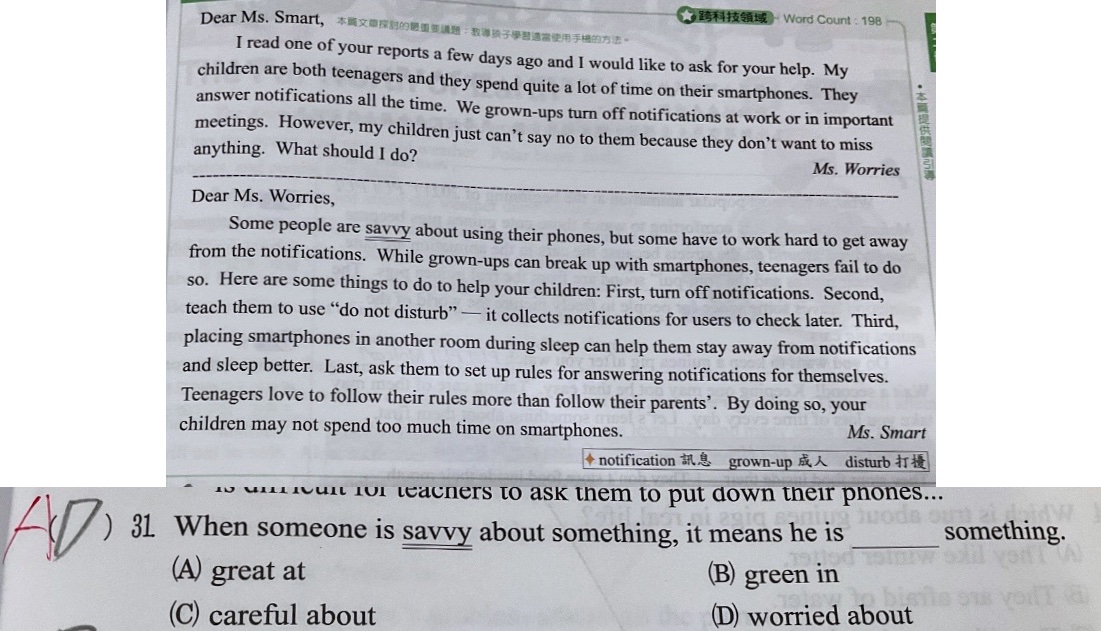
當時選了 (D) worried about,紅筆訂正為 (A) great at。
這題的固定動作:看到畫底線的生字,先在那一句裡找 but/however/while,把它圈起來。
然後只讀「已知的那一半」,把它的相反寫在旁邊——那就是答案。
整篇文章的情緒(這題是「擔心」)一律不列入考慮。
複習標記
看完這一頁順手標一下,紀錄會同步到總覽頁—— 標「有把握」的會被劃掉,標「有疑問」的會被標成琥珀色,可以用「只看有疑問的」單獨叫出來。 再按一次同一顆按鈕就取消。紀錄存在這台裝置的瀏覽器裡。