文氏圖中間那格要填「兩邊都成立」的事——不是各自的特色
題目
Billy:That’s an interesting topic. Tell us more.
Nancy:In Korea, there are two kinds of special seats, usually at the ends of each metro car. One is the senior seat for old people, people with disabilities, and parents with babies. Young people will give up these seats to any of them. The other is the pregnant woman seat, and it is pink. Anyone can sit there, but when a pregnant woman comes, others will stand up and offer the seat.
Jack:How do these seats work? Do the people in need really get to sit there?
Nancy:As far as I know, they do. Young people in Korea do not fight over seats with them. It’s a good sign that shows respect and care for others.
(priority seat 優先座 disability 身心障礙 pregnant 懷孕 offer 讓座 respect 尊重)
Q37. Susan made a comparison of the two special seats in the metro cars in Korea. Which can she put in B?
【文氏圖】左圈=The Senior Seat 中間重疊處=B 右圈=The Pregnant Woman Seat
- (A) 拄拐杖的老先生(圖)
- (B) 帶著小孩的媽媽(圖)
- (C) 孕婦(圖) ← 我的答案
- (D) 標誌:YOUNG PEOPLE SHOULD GIVE IT UP(圖) ← 正確答案
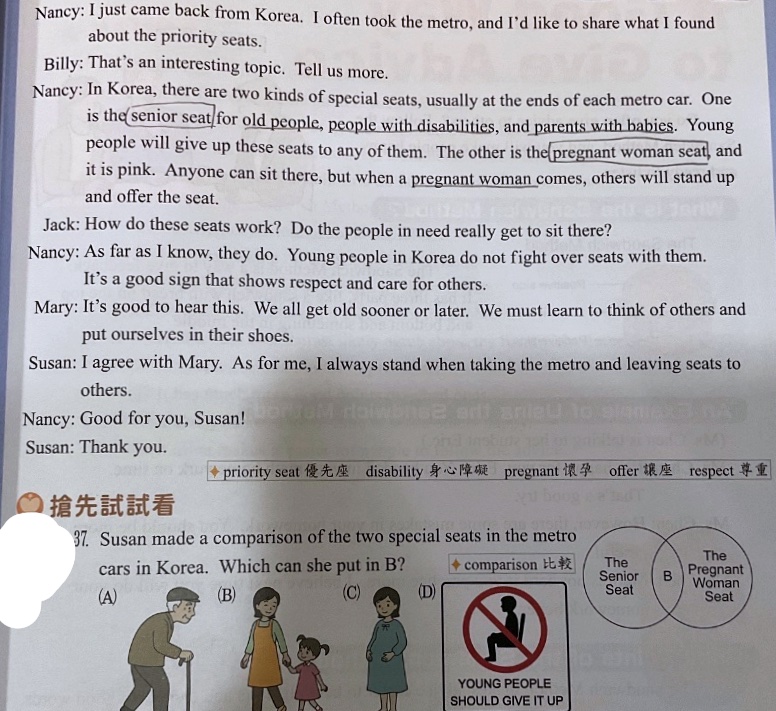
錯在哪裡
文氏圖(兩個圓圈交疊)的規則只有一條:
中間重疊的部分 = 左右兩邊「同時都成立」的事。
沒有重疊到的地方 = 只有那一邊才有的特色。
孕婦(pregnant woman)在文章裡只出現在 pregnant woman seat 這一段, senior seat 的服務對象是 old people、people with disabilities、parents with babies,沒有孕婦。
所以孕婦只能放進右圈,不能放中間。
錯因:看到選項在文章裡有出現就勾了,沒有回頭問「這件事在左邊也成立嗎?」
正確解法
| 項目 | The Senior Seat | The Pregnant Woman Seat |
|---|---|---|
| 給誰坐 | 老人、身障者、 帶嬰兒的家長 |
任何人都可以坐 (Anyone can sit there) |
| 顏色 | 文章沒寫 | 粉紅色 |
| 需要的人來了怎麼辦 | 年輕人會讓座 Young people will give up these seats |
其他人會起身讓座 others will stand up and offer the seat |
| 位置 | 兩種都在每節車廂的兩端(usually at the ends of each metro car) | |
兩欄寫完,哪一列「兩邊都填得出東西」,那一列就是中間 B。
這題只有「需要的人來了要讓座」這一列,左右都成立。
老人、身障者、
帶嬰兒的家長
→ (A)(B) | 中間 B
都要讓座
→ (D) | 只在右圈
孕婦、粉紅色
→ (C)
四個選項剛好把三個位置都填滿了—— (A)(B) 是左邊、(C) 是右邊、(D) 是中間。 出題者故意讓每個選項都「在文章裡找得到」,逼你判斷它屬於哪一區。
- ✗(A) 拄拐杖的老先生
對應 old people,這是 senior seat 的服務對象。
孕婦座沒有規定要讓給老人(Anyone can sit there),所以只能放左圈。 - ✗(B) 帶著小孩的媽媽 對應 parents with babies,同樣是 senior seat 的服務對象。只能放左圈。
- ✗(C) 孕婦
只出現在 pregnant woman seat 那一段,
senior seat 的三種對象裡沒有孕婦。只能放右圈。
(生活常識上孕婦當然也可以坐博愛座,但文章沒有這樣寫,閱讀題只能用文章當證據。) - ✓(D) YOUNG PEOPLE SHOULD GIVE IT UP(年輕人應該讓座)
左圈:Young people will give up these seats to any of them.
右圈:when a pregnant woman comes, others will stand up and offer the seat.
兩邊都在講同一件事——需要的人來了,坐著的人要起身讓出來。 這才是共同點,放中間 B。
要記住的觀念
- 文氏圖題只有一個判準:中間 = 兩邊同時成立。 先確認哪一圈是哪一個,再逐一問「這件事在另一邊也對嗎?」
- 做法:把兩個對象各寫成一欄,同一列比對。 兩欄都填得出來的那一列,就是中間的答案。
- 看到 comparison、compare、both、difference、alike 這些字,就要準備畫兩欄表。
- 「文章裡有出現」不等於「放對位置」。 這題四個選項全部都在文章裡,差別只在屬於左、中、右哪一區。
- 常識不能補進文章。 孕婦當然也需要博愛座,但文章列的 senior seat 對象只有三種,沒有孕婦。
延伸:這篇對話的重點用法
give up = 讓出(座位)/放棄
Young people will give up these seats.(讓座)
offer the seat = 讓座(offer = 主動提供)
as far as I know = 就我所知(表示自己不是百分之百確定)
put oneself in someone’s shoes = 設身處地為人著想
後面 Mary 說 We must learn to think of others and put ourselves in their shoes.
字面是「穿上別人的鞋」,這種比喻型片語考試很愛考,要整組背。
sooner or later = 遲早
We all get old sooner or later.(我們遲早都會老。)
fight over = 為了……爭吵
Young people do not fight over seats with them.
類題自我檢測
依照上面那篇對話,如果 Susan 要在文氏圖上多填幾項,下列各應該放左圈、中間、還是右圈?
1. It is pink.
2. It is usually at the end of a metro car.
3. Anyone can sit there when no one needs it.
4. It is for people with disabilities.
看解答
1. 右圈。文章只說孕婦座是粉紅色(and it is pink),沒說博愛座的顏色。
2. 中間。文章寫 two kinds of special seats, usually at the ends of each metro car
——「兩種」一起講,所以兩邊都成立。
這種「一句話同時涵蓋兩個對象」的句子,幾乎一定是中間那格的答案來源,要特別留意。
3. 右圈。Anyone can sit there 只出現在孕婦座那一段。
博愛座那段沒有這樣寫。
4. 左圈。people with disabilities 是 senior seat 的三種對象之一。
四題都用同一個動作解決:回文章找那句話,看它是在講哪一種座位,或是同時在講兩種。
我的原始作答
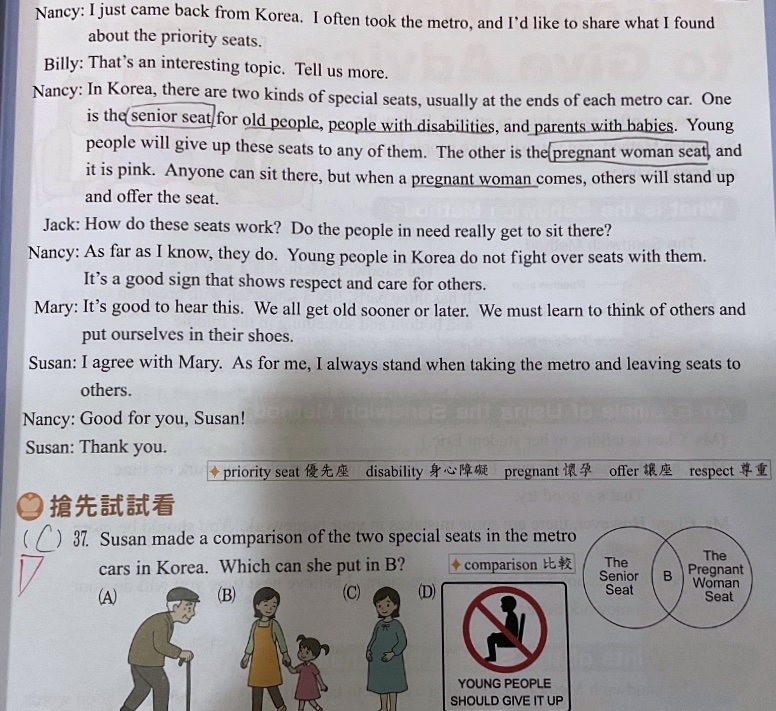
當時選了 (C) 孕婦,紅筆訂正為 (D) 年輕人應該讓座。
這題的固定動作:看到文氏圖,先在題目旁邊畫兩欄表,把兩個對象的資料抄進去。
問中間就找「兩欄都有」的那一列,問左右就找「只有一欄有」的那一列。
複習標記
看完這一頁順手標一下,紀錄會同步到總覽頁—— 標「有把握」的會被劃掉,標「有疑問」的會被標成琥珀色,可以用「只看有疑問的」單獨叫出來。 再按一次同一顆按鈕就取消。紀錄存在這台裝置的瀏覽器裡。