三種生物別搞混——「在糞便裡長大」的是蛾寶寶,不是那個綠綠的藻
題目
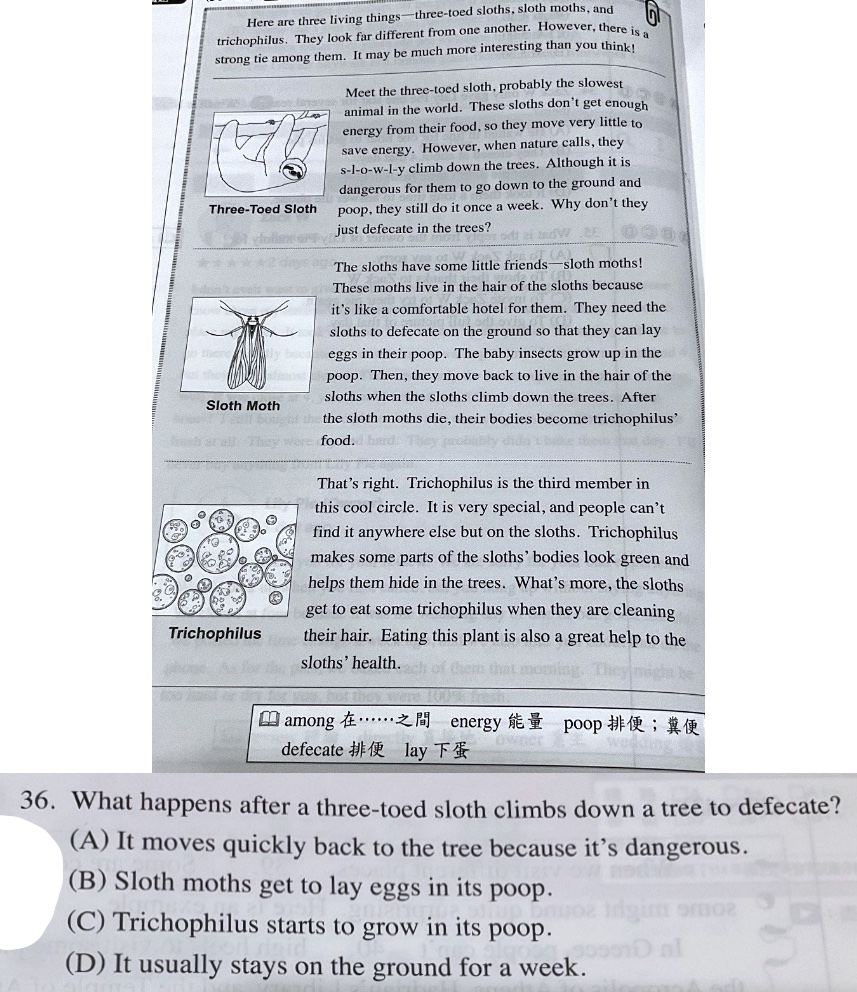
【三趾樹懶】Meet the three-toed sloth, probably the slowest animal in the world. These sloths don’t get enough energy from their food, so they move very little to save energy. However, when nature calls, they s-l-o-w-l-y climb down the trees. Although it is dangerous for them to go down to the ground and poop, they still do it once a week. Why don’t they just defecate in the trees?
【樹懶蛾】The sloths have some little friends—sloth moths! These moths live in the hair of the sloths because it’s like a comfortable hotel for them. They need the sloths to defecate on the ground so that they can lay eggs in their poop. The baby insects grow up in the poop. Then, they move back to live in the hair of the sloths when the sloths climb down the trees. After the sloth moths die, their bodies become trichophilus’ food.
【毛髮藻 trichophilus】That’s right. Trichophilus is the third member in this cool circle. It is very special, and people can’t find it anywhere else but on the sloths. Trichophilus makes some parts of the sloths’ bodies look green and helps them hide in the trees. What’s more, the sloths get to eat some trichophilus when they are cleaning their hair. Eating this plant is also a great help to the sloths’ health.
(among 在……之間 energy 能量 poop 排便;糞便 defecate 排便 lay 下蛋)
Q36. What happens after a three-toed sloth climbs down a tree to defecate?
- (A) It moves quickly back to the tree because it’s dangerous.
- (B) Sloth moths get to lay eggs in its poop. ← 正確答案
- (C) Trichophilus starts to grow in its poop.
- (D) It usually stays on the ground for a week.
這一題圖上只有紅筆訂正的 (B),沒有留下當時的作答, 所以下面直接講「三種生物怎麼分清楚」。
這題的陷阱在哪裡
(C) 把「在糞便裡長大的」記成毛髮藻—— 文章寫的是 The baby insects grow up in the poop, baby insects 是「樹懶蛾的寶寶」,不是毛髮藻。 毛髮藻長在樹懶「身上」,而且它吃的是死掉的蛾。
(A) 把「慢」記成「快」—— 文章一直強調樹懶 move very little、s-l-o-w-l-y(連字母都拉長了), 選項卻寫 moves quickly。
(D) 把「一週一次」讀成「待一週」—— once a week = 每週一次(頻率), for a week = 持續一週(時間長度),完全不同。
三個生物、三種關係,用讀的一定會混。這篇非畫圖不可。
正確解法
| 角色 | 住在哪 | 做什麼 | 從誰身上得到好處 |
|---|---|---|---|
| 三趾樹懶 sloth |
樹上 | 動作極慢;每週下樹排便一次 | 吃毛髮藻補身體; 靠毛髮藻的綠色躲藏 |
| 樹懶蛾 sloth moth |
樹懶的毛裡 像旅館一樣舒服 |
在樹懶的糞便裡產卵; 幼蟲在糞便裡長大, 長大後回到樹懶毛裡 |
靠樹懶下樹排便 才有地方產卵 |
| 毛髮藻 trichophilus |
只長在樹懶身上 別的地方找不到 |
讓樹懶身體變綠、幫牠偽裝 | 吃死掉的樹懶蛾 |
幼蟲長大 → 蛾回到樹懶毛裡
死後成為 → 毛髮藻的養分 → 毛髮藻讓樹懶
變綠、被吃掉補身體
這就是文章說的 a strong tie among them(三者之間緊密的連結)和 this cool circle(這個酷炫的循環)。 畫成一個圈,三個角色就不會再混。
題目:What happens after a three-toed sloth climbs down a tree to defecate?
(樹懶爬下樹排便之後,發生什麼事?)
找到樹懶蛾那一段:
They need the sloths to defecate on the ground so that they can lay eggs in their poop.
(牠們需要樹懶在地上排便,好讓牠們能在糞便裡產卵。)
so that = 為的是、以便——這個連接詞直接把「排便」和「產卵」綁在一起,
就是題目要的因果與先後關係。
→ 排便之後,樹懶蛾就能產卵 → (B)。
- ✗(A) It moves quickly back to the tree because it’s dangerous.
(因為危險,牠快速回到樹上)
「危險」是文章有寫的(it is dangerous for them to go down), 但「快速」和文章直接矛盾—— 文章說 move very little、s-l-o-w-l-y climb down, 還說牠是 probably the slowest animal in the world。
典型的「一半對、一半錯」誘餌。 - ✓(B) Sloth moths get to lay eggs in its poop.
(樹懶蛾得以在牠的糞便裡產卵)
完全對應 so that they can lay eggs in their poop。 而且這正是文章對「為什麼樹懶要冒險下樹」這個問題的解答。 - ✗(C) Trichophilus starts to grow in its poop.
(毛髮藻開始在糞便裡生長)
角色搞錯了。在糞便裡長大的是 the baby insects(蛾的幼蟲)。
毛髮藻的生長地點文章講得很死:people can’t find it anywhere else but on the sloths (除了樹懶身上,哪裡都找不到)。 糞便在地上,不在樹懶身上。 - ✗(D) It usually stays on the ground for a week.
(牠通常在地上待一星期)
把 once a week 讀成 for a week。
once a week = 一週一次(多久做一次)/ for a week = 待一星期(做多久)。
文章只說牠一週下來一次,完全沒說牠在地上待多久。
要記住的觀念
- 科普文出現三個以上的角色,一律先畫關係表或關係圈。 每個角色寫三欄:住在哪、做什麼、從誰身上得到好處。 畫完再看題目,比反覆回頭找快得多。
- 順序題(after / before / then)要抓連接詞。
so that(為的是)/then(接著)/after(之後)/when(當……時) ——這些字直接標出了事件的先後,圈起來就好。 - 「頻率」和「持續時間」是兩回事:
once a week = 一週一次/for a week = 持續一週/ in a week = 一週後
數字後面的介系詞決定意思,不能跳過。 - 選項把角色掉包,是科普文最常見的陷阱。 看到選項的主詞,先問「文章裡做這件事的真的是牠嗎?」
- 和文章事實矛盾的字,一個就足以刪掉整個選項。 (A) 的 quickly 就是——整篇都在強調牠慢。
延伸:這篇文章的重點用法
① so that = 為的是、以便(表目的)
They need the sloths to defecate on the ground so that they can lay eggs.
so that 後面接完整句子,常配 can/may/will。
不要和 so + 形容詞 + that(如此……以至於)搞混。
② not anywhere else but = 除了……別的地方都沒有
people can’t find it anywhere else but on the sloths
這裡的 but = 除了(= except),不是「但是」。
第 2 冊 7/09 第 14 題的 anything but 考的也是這個 but。
③ get to + 原形V = 得以、有機會做
Sloth moths get to lay eggs./the sloths get to eat some trichophilus.
帶有「這是好事、是一種機會」的語氣。
④ What’s more = 而且、更重要的是(用來再加一個優點)
⑤ when nature calls = 內急的時候(很文雅的說法,字面是「大自然在呼喚」)
⑥ 注意文章故意把 slowly 寫成 s-l-o-w-l-y——
作者用拉長字母的方式表現「慢」,這種排版本身就是線索。
類題自我檢測
依照上面那篇文章判斷:
1. Why is trichophilus helpful to the three-toed sloths?(可複選)
(A) 它讓樹懶的身體看起來綠綠的,幫助牠們躲在樹上。
(B) 它幫樹懶把樹懶蛾趕走。
(C) 樹懶理毛時吃掉一些,對健康有幫助。
(D) 它幫樹懶爬得比較快。
2. What happens after the sloth moths die?
(A) They fall to the ground and lay eggs. (B) Their bodies become food for trichophilus.
(C) The sloths eat them. (D) They grow up in the poop.
看解答
1. (A) 和 (C)。文章寫
makes some parts of the sloths’ bodies look green and helps them hide in the trees(對應 A)、
the sloths get to eat some trichophilus… a great help to the sloths’ health(對應 C)。
(B) 毛髮藻是「吃死掉的蛾」,不是趕走蛾——又是角色關係搞混。
(D) 文章完全沒提到爬得快,而且樹懶就是以慢出名的。
2. (B)。文章最後一句寫得很清楚:
After the sloth moths die, their bodies become trichophilus’ food.
(D) grow up in the poop 是「幼蟲」的階段,不是「死後」——
同一個角色的不同階段被拿來混淆,是這類題目的進階陷阱。
所以關係圖除了畫「誰跟誰」,還要標上「順序」。
我的原始作答
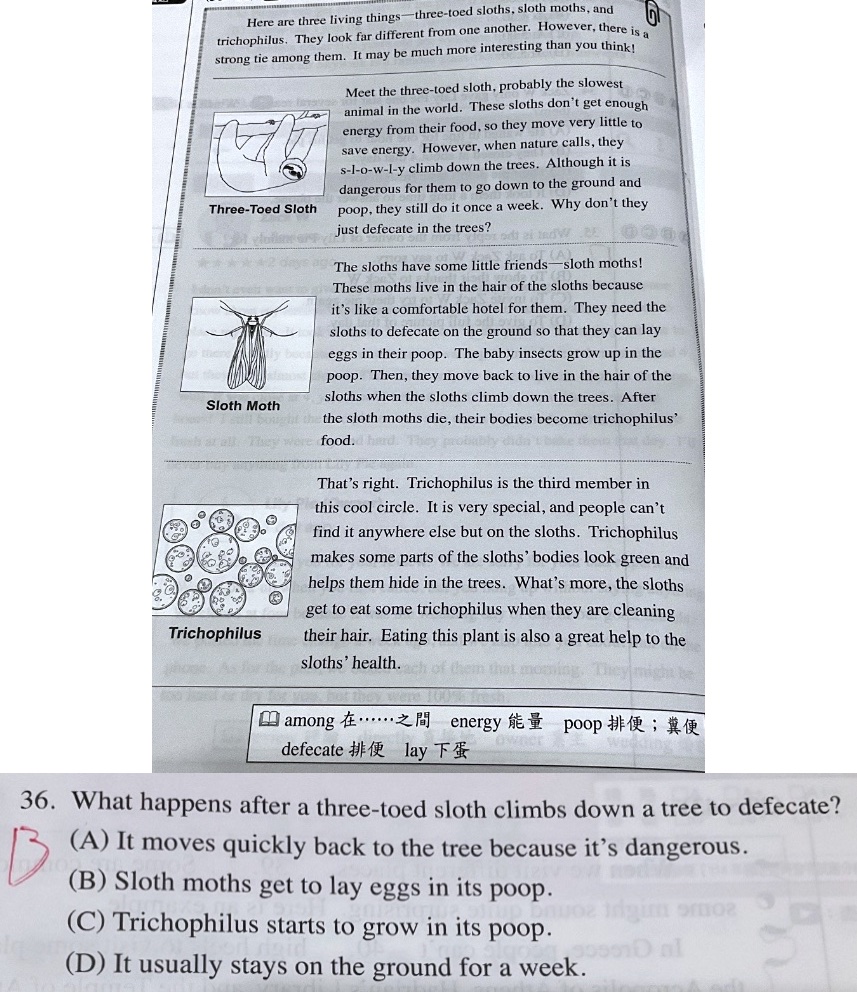
這一題圖上只有紅筆訂正的 (B),沒有留下當時選了什麼,所以不做作答分析。
這題的固定動作:三個生物的文章,一開始就在空白處畫三個圈,一邊讀一邊用箭頭連起來。
看到選項時,先看它的主詞是哪一個圈,再確認那件事真的是這個圈做的。
複習標記
看完這一頁順手標一下,紀錄會同步到總覽頁—— 標「有把握」的會被劃掉,標「有疑問」的會被標成琥珀色,可以用「只看有疑問的」單獨叫出來。 再按一次同一顆按鈕就取消。紀錄存在這台裝置的瀏覽器裡。